 | | Diesel Locomotive Galleries
Images of Diesel Locomotives which have passed through Taunton.
Click here to view gallery |
|
|
|
 | | Diesel Multiple Units
Images of Diesel Multiple Units (DMU) and Bi-mode Units which have passed through Taunton.
Click here to view gallery |
|
|
|
 | | Steam Locomotive Galleries
Images of Steam Locomotives which have passed through the Taunton area.
Click here to view gallery |
|
|
|
 | | Location Galleries
Photographic Locations Gallery
Click here to view gallery |
|
|
|
 | | The West Somerset Railway
Images taken on The West Somerset Railway
Click here to view gallery |
|
|
|
 | | 'Rolling Stone' On The West Somerset Railway
Images of the various heavy stone trains which have operated from the Mendip Quarries to Minehead for coastal sea defense work.
Click here to view gallery |
|
|
|
 | | Charter Train Galleries
Images of steam and diesel charter trains/ railtours which have passed through Taunton.
Click here to view gallery |
|
|
|
 | | Current Train Operating Companies
Images of Current Train Operating Companies which have operated in the Taunton area.
Click here to view gallery |
|
|
|
 | | Railfreight Sector Gallery
Trainload Freight (TLF) was created in 1988 as the sector of British Rail responsible for operating unit trains. The division was subdivided into four sub-sectors according to cargo carried: Coal, Construction, Metals, and Petroleum Other wagonload freight activities and containerised freight were organised in the Railfreight Distribution (RfD) division at the same time.
Click here to view gallery |
|
|
|
 | | Past Train Operating Companies
Images of Past Train Operating Companies which have operated in the Taunton area.
Click here to view gallery |
|
|
|
 | | The 'Collections' Gallery
Images from various Archive Collections hosted by Taunton Trains
Click here to view gallery |
|
|
|
 | | The Network Rail Gallery
Images of Network Rail services and equipment which have been photographed in the Taunton Area
Click here to view gallery |
|
|
|
 | | The Rail Head Treatment Train Gallery
Images of the annual Rail Head Treatment Trains (RHTT) which have been photographed in the Taunton Area.
Click here to view gallery |
|
|
|
 | | The Fawley Tanks Train Gallery
Images the famous 'Fawley Tanks' which operated through Taunton from the 1980s through to 2013 before the flow ceased and went over to road transport.
Click here to view gallery |
|
|
|
 | | The Exeter Riverside Stone Train Gallery
Images of the Exeter Riverside Stone train which operated from March 1997 until the 28th March 2025 when the train ceased to operate.
Click here to view gallery |
|
|
|
 | | The Network Rail HOBC & TRT Gallery
Images of the Network Rail High Output Ballast Cleaner (HOBC) and Train Repair Train (TRT) which have been photographed in the Taunton Area.
Click here to view gallery |
|
|
|
 | | The British Rail - BR Blue Gallery
Images taken of British Rail - BR Blue services operating Trains in the Taunton area.
Click here to view gallery |
|
|
|
 | | The British Rail - Intercity Gallery
Images taken of British Rail - Intercity services operating Trains in the Taunton area.
Click here to view gallery |
|
|
|
 | | The Taunton Staff Gallery
Images of former members of Staff who once worked at Taunton.
Taunton once had a large staff base which over the years has sadly shrunk beyond all recognition. Over the years we have been sent a reasonable selection of photos containing former station staff and drivers formerly based at Taunton. If you have any Staff Photos in your collection then please contact Taunton Trains mailto:taunton.trains@googlemail.com and we can expand this gallery to include more former members of staff.
Click here to view gallery |
|
|
|
 | | The Famous Faces Gallery
Images of Famous Faces who have been photographed at Taunton Station.
Click here to view gallery |
|
|
|
 | | Signal Boxes and Signals
Images taken the various Signal Boxes and Signals in the Taunton area.
Click here to view gallery |
|
|
|
 | | Taunton Station Buildings
Images taken of the Station Buildings at Taunton
Click here to view gallery |
|
|
|
 | | Scenes in the Snow
Images taken in the Snow from various years in the Taunton area.
Click here to view gallery |
|
|
|
 | | Snow Plough Tests
Images taken of locomotives testing the Network Rail Snow Ploughs from Fairwater Yard
Click here to view gallery |
|
|
|
 | | The Royal Train
Images taken of the Royal Train in the Taunton Area
Click here to view gallery |
|
|
|
 | | The Night Riviera Sleeper
Images taken of the Night Riviera 'Sleeper' service in the Taunton Area
Click here to view gallery |
|
|
|
 | | The Virgin Cross Country Locomotive Farewell
Images taken of the final Locomotive Hauled Train for Virgin Cross Country on the 19th August 2002.
Click here to view gallery |
|
|
|
 | | HST Farewell
Images taken of the final day HST diagrams in the South West on the 18th May 2019.
Click here to view gallery |
|
|
|
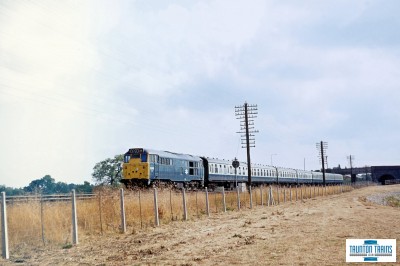 | | #Throwback Thursday
A Gallery dedicated to our #throwbackthrusday to record all the images which have been shown on our News Page each week.
Click here to view gallery |
|
|
|
 | | GWR Rememberance
A Gallery dedicated the GWR Remembrance Powercar No.43172 carries the speical scheme and is also named Harry Patch. Henry John Patch (17 June 1898 – 25 July 2009), dubbed in his later years "the Last Fighting Tommy", was an English super-centenarian, briefly the oldest man in Europe and the last surviving combat soldier of the First World War from any country. He is known to have fought in the trenches of the Western Front.Patch was the longest-surviving soldier of World War I, but he was the fifth-longest-surviving veteran of any sort from World War I, behind British veterans Claude Choules and Florence Green, Frank Buckles of the United States and John Babcock of Canada.[2] At the time of his death, aged 111 years, 1 month, 1 week and 1 day, Patch was the third oldest man in the world, behind Walter Breuning & Jiroemon Kimura, the latter of whom would become the oldest verified man ever.
Click here to view gallery |
|
|
|
 | | Taunton Station - Behind the Scenes
A behind the scenes gallery from Taunton Station, with access made possible for a supervised visit to record scenes at Taunton before they were changed by building work or demotion.
Click here to view gallery |
|
|
|
 | | Silk Mills Road Bridge - April 2005
Silk Mills Road in Taunton links the A38 from Wellington to the A358 to Minehead and Norton Fitzwarren. The road name originates back to the 13th Century when Taunton was a prosperous wool making town. Although named Silk Mills Road, locally it has always referred to as 'Silk Mills'.| The road was originally built during the 1970s to link the Westernmost extremities of Taunton's roads, to give a good link between two main road arteries. Unfortunately, the floor in the plan was the railway. The road needed to cross the Bristol/ London to Exeter mainline at the South end of Fairwater Yard adjacent to Silk Mills Signal Box. Rather than construct a bridge, a flat road crossing with barriers was chosen. No one at the time could have predicted the traffic congestion problems that would occur some 35 - 40 years in the future.| During the 1990s traffic in the town had grown to such an extent that a large queue of cars was causing delays with traffic backing up onto other roads in the area while the barriers were in the down position. During evening rush hour periods it would not be uncommon to take nearly 20-30 minutes to negotiate the length of the road, due to the period's traffic was sat ideal waiting for trains to pass by. The County Council had to act, and after years of surveys, talks, meetings, and planning, a plan for Silk Mills Bridge was put forward to ease traffic congestion and incorporate a Park and Ride Scheme close by.| The Bridge would change the look of the area forever, it was a huge scheme, but it would also provide Taunton with a new vantage point to view train services in the area, and a way of reducing the traffic congestion in the town. Taunton Trains covered the event at the time because of its importance to the railway scene.| Silk Mills bridge became a local landmark and many have forgotten the old railway crossing ever existed. We hope this page will serve as a timely reminder of how the area has changed from its original construction in the 1970s through to the current day. It is however a tad ironic that despite the Country Council spending hundreds of thousands on this new road scheme that traffic congestion is in the area is now worse than ever. After the bridge construction and opening of the bridge planners saw fit to reduce the speed of the road down from a mixture of 40mph and 60mph to just 30mph throughout, and then installed a record number of traffic lights at various junctions over the entire length of the road. As a result travel times of 15 - 20 minutes over the length of the road at rush hour are no different to sitting in one position waiting for a train to pass!
Click here to view gallery |
|
|
|
 | | Bradford on Tone - De-railement
It was during the early hours of the 16th May 1991 that a major incident occurred in the Taunton area at Bradford on Tone just south of the automatic barrier crossing.
The derailment and subsequent fire occurred when 6C35 23:35 (TThO) Briton Ferry – Heathfield (Newton Abbot) loaded fuel (containing a mixture of petroleum spirt, diesel, and kerosene) derailed at around 04:30 in the morning. All 22 of the loaded Gulf fuel tanks had derailed. The locomotive No.47327 remined on the track and was able to be uncoupled moved forward to a safe position before raising the alarm with Exeter panel box via the in-cab radio. A few of the derailed tanks ruptured leaking their contents, the combination of fuel and vapour ignited causing other tanks to explode causing a major incident for the emergency services. Local families were told to stay in their homes and those living at closer farms were evacuated. The smoke from the fire was visible from 15 miles away. The track was blocked and track circuit information was cut off at the Exeter Power Box. The line remained closed between 16th – 19th May with diversions in place via Castle Cary, Yeovil and Honiton to and from Exeter with road bus connections also linking Tiverton Parkway. As part of the clean-up effort No.47335 was also sent up from Laira with the Laira re-railing train together with heavy road cranes to lift the wagons clear of the line. No.37035 delivered new rails to the site on the ‘down’ line on Sunday 19th May and No.47371 also arrived with a loaded ballast train on the ‘up’ line. No.47098 also delivered a second ballast train to the site last on the Sunday afternoon.
On Monday 20th May a single line (up) was reopened at 06:00, later at 18:00 both the down lines had been restored. The centre platforms at Taunton Station were also brought back into use over the Sunday to handle terminating services. The close proximity of the River Tone (reference pollution) and the care for use of oxy-acetylene torches for cutting wagons due to vapour emissions hampered clearance work. British Rail investigators blamed the derailment on a hot axle bearing on one of the wagons which was thought to have caused the train derailment.
We have been able to provide a list of BR planned service changes on the 18th May . Thankfully there were not injuries and all parties were thankful the event occurred in the countryside and not Taunton, as the situation could have been far worse had the derailment of occurred in a populated area.
Click here to view gallery |
|
|
|
 | | Cogload Junction - De-railement
On the 17th August 1986 was an event which happened at Cogload Junction. A south bound overnight cement service left the rails just south of Cogload Junction causing one of the largest derailments Taunton has ever seen. The major incident closed the mainline between Taunton to Bristol and Westbury. The four-track mainline was closed while the clear up operation took place, with single lines later reopened to traffic once wagons had been cleared from the running lines and track had been repaired. Locos reported in the clean-up operations are as follows: 33004, 33010, 37304, 47015, 47144, and 50046. The derailment was caused by the train having run from Westbury with a wagon handbrake on, the impending wheel flat got so deep that hit a check rail at Cogload Junction and derailed the train.
Click here to view gallery |
|
|
|
 | | 40 Steps - Bridge Replacement 2013/2014
On Wednesday, 16th July 2014 marked the opening of the new footbridge to replace the famous '40 Steps'.| The opening took place with no ceremony. However, access to the new bridge is by steps only at present as work on the construction of the ramps on both sides of the railway has fallen behind schedule. This important crossing for pedestrians and cyclists has been missing for 261 days as 40 Steps was closed on 28th October 2013. Unlike 40 Steps, the new bridge itself is an enclosed structure but there are some new railway photographic opportunities to explore. It also provides a vantage point to observe the construction of the new road running along the former Fairwater Yard head shunt.
Click here to view gallery |
|
|
|
 | | Namings at Taunton
Images taken of locomotives and units being named in the Taunton area.
Click here to view gallery |
|
|
|
 | | Weedkiller Trains
Images taken of various Weed Killer Trains operating in the Taunton Area.
Click here to view gallery |
|
|
|
 | | Road Haulage
Images taken of locomotives and stock taken in the Taunton Area being transported by road.
Click here to view gallery |
|
|
|
 | | Strange But True
Random Images depicting strange but true railway-related interesting incidents in the Taunton area.
Click here to view gallery |
|
|
|
 | | Track Renewals - Cogload Junction - November 2019
Images taken of the November 2019 Track Renewals which saw the six day closure of the mainline at Cogload Junction.
Click here to view gallery |
|
|
|
 | | Track Renewals - Taunton Station - March 2023
Images taken of the March 2023 Track Renewals which saw the four closure of the mainline at Taunton Station, with buses replacing all train services
Click here to view gallery |
|
|
|
 | | Whiteball Tunnel Engineering - February 2014
Since the 18th January 2014, Network Rail has been embarking on a complicated project to carry out works to repair Whiteball Tunnel in partnership with Amco Rail.
The 1000m long tunnel built in 1842 and straddles the Somerset/ Devon boarder between Taunton and Tiverton.
To prevent potential brick fall the tunnel lining had previously been relined with a Ram Arch wire mesh system two years ago. During the January closure new concrete lining has been applied to the worst areas and main crownbrick arch to prevent future deterioration of the tunnel, and improve safety. Work has also been carried out to improve water drainage and embankment stability on both the Taunton and Exeter sides of the tunnel. A future phase of works will see the sides of the tunnel receive a similar concrete spray treatment, in partnership with Amco a new type of train wagon/ platform has been developed, which will allow work to be carried out from the stable platform of the wagon while trains will be able to pass on the opposite line without posing a danger to workmen. This collaborative effort by Amco and Network Rail have provided a unique solution to allow work to be carried out on the remaining phase without the need to close the mainline again.
Unfortunately for normal rail passengers, Network Rail were forced to close the line for three weeks between the 18th January until the 9th February in order to carry out this complex piece of work within the confined space of the tunnel. During the three-week closure passengers were transferred onto a well-organised bus service between Taunton, Tiverton and Exeter, while selected train services operated via Yeovil & Honiton to Exeter. Network Rail saw the closure of the Taunton – Exeter mainlines as a positive step to incorporate three separate upgrade projects into one programme, this enabled them to tackle the tunnel and the railway infrastructure at the same time, without having to close the railway in the future. Around three miles of track have also been renewed and seven units of switches and crossings re-laid separately at Taunton and Tiverton. The upgrade work has been in the planning for over three years, and once complete will enable trains to travel at a higher speed and improve journey times. This co-ordinated and efficient effort will significantly help boost rail performance whilst complementing Network Rail's long-term aspiration to improve services between Bristol and Exeter. Network Rail have invested a total of £15m on the essential upgrade / renewal works.
Click here to view gallery |
|
|
|
 | | Track Renewals - Taunton Station - January 2014
Images taken of the January 2014 Track Renewals which saw the three day closure of the mainline south of Taunton Station.
Click here to view gallery |
|
|
|
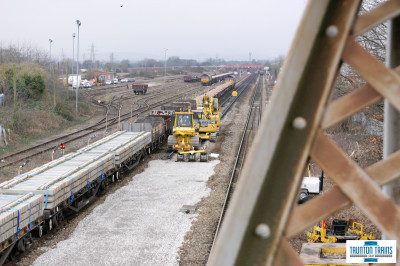 | | Track Renewals - Staplegrove Road - January 2006
Images taken of the January 2006 Track Renewals which the down mainline replaced between Staplegrove Road and Silk Mills crossing. Images shown the use of Fairwater Yard to stable engineering trains.
Click here to view gallery |
|
|
|
 | | Track Renewals - Creech St Michael - December 2005
Images taken of the December 2005 Track Renewals which saw the three day closure of the mainline at Creech St Michael.
Click here to view gallery |
|
|
|
